Sunday, November 7, 2010
Paolo Nutini's Burns
Time present and time past are both perhaps present in time future: check out this version of "A Man's a Man for A' That" by the Scottish singer Paolo Nutini.


Saturday, October 30, 2010
Samhain Journeys

Annie and Grandy on my 6th birthday, Samhain 1962
For my Halloween-Samhain-birthday gift to myself this year, I took a powerful healing journey under the guidance of two local shamans. Against a backdrop of achingly burnt-orange trees outside their huge picture windows, Evie and Allie accompanied me on a sure, swift, thorough swoop through my inner landscape to pick up lost pieces and resolve longstanding hurts. It is wondrous work, full of metaphor and symbol that is truer than truth, poetry in capital M motion. My first shamanic journeys, with Fred Tietjen in San Francisco in 1991, were a watershed experience in my growth as a Witch; they reunited me with my earliest nourished wholeness in the natural world. This week's journey reminded me, in turn, of the connected fullness that shamanic work reveals as our core state. And this time also put me in far deeper touch with another aspect of the experience, the knowledge of not being alone, of having all the helpers and guides I need to call on, whether spiritual, animal, or ancestor.
The ancestor guide I feel most strongly with me now is my grandmother, Marjorie Hughan Rockwell. She's the "mother's mother" in my poem "Samhain." Here she is, in the only photo I know of myself with her. I'll be thinking of her a lot this Samhain, placing her picture on the ancestors' altar tonight and sending her a note via candle flame.
Thursday, October 7, 2010
"50 Best Blogs for Wiccans" (Including American Witch)
A very useful list of 50 Best Blogs for Wiccans has been compiled by Marcia Colgar, and I'm happy to say that "American Witch" is included!~
Dead Poets at Cundy's Harbor

Today is Dead Poets Remembrance Day—the very first Dead Poets' Remembrance Day, in fact. The holiday was started this year (and the date set for October 7, Edgar Allan Poe's death-day), by Walter Skold, a person of staunch mission and wide vision, founder of the Dead Poets Society, who has located and honored the graves of hundreds of poets. Lately I have been thinking a lot about my own grave (more on that in a future post), and I resonate with Walter's emphasis on the importance of poets' graves.
So i was happy to be asked to participate in the kickoff celebration in Maine this year, which I did by reading a poem by Maine poet Celia Thaxter early this morning in a beautiful old meeting house in a town called Cundy's Harbor.
Afterwards, several of us stopped up the street at the graves of another Maine poet, Robert P. Tristram Coffin, winner of the 1936 Pulitzer Prize for poetry, and his wife and daughter. We read aloud the poems engraved on each stone and discussed poetry, life, and death as Walter's film team documented the occasion. One among us, a fine lobsterman-poet who had not yet published his work, treated us to a recitation of a couple of his poems—the diction of one of which had been indelibly criticized, many decades ago when the poem was new, by Coffin's sister.
So the thread of poetry and meaning, the still-and-always-thriving oral tradition, the chain of verbal culture, so intimately tied, as this morning proved, with the chain of all human culture and the meaning we continually make, continues. Or, as the president of the Harpswell Historical Society told me this morning, when I commented that the town must have a fascinating history: "every single town, wherever you go, every single one has a fascinating history." And of course he's right. And so does every poet.
For the lobsterman poet (whose name I, alas, didn't catch), Walter read aloud in a resonating voice the final words on Coffin's headstone, a powerful couplet along the lines of, "I kept the age-old law, I wrote what I saw," before driving off with the film crew in in his van, "Dedgar," to visit more graves. Gravespeed to them, and I'll be looking forward to next year's Dead Poets Remembrance Day.
Sunday, October 3, 2010
Longen Folk: The Parade, the Pilgrimage, the Poem
"Thanne longen folk to goon on pilgrimages"
—Chaucer
This morning, the Maine Marathon was going by just up the street, and when I saw all the activity, the cars parked all up and down our normally rather quiet block and so many people rushing by with their kids and rattles to cheer the runners on, I felt compelled to join them. I grabbed my favorite percussion instrument, a little hand-drum with a lizard painted on it and a great sound, and made my way up the street to where the local market was handing out cups of water and a trio of bearded Baby Boomers with electric guitars were belting out Beatles songs.
The runners, of all ages, genders, races, sizes, weights, heights, and physical conditions, in emotional states apparently ranging from triumph to desperation, were already straggling by in outfits ranging from lobster hats to high-tech runwear. People around me were waiting for their friends, cheering, and then getting their kids and leaving. My daughter had had no interest in coming, and I don't know a lot of runners; I recognized one (or maybe two, I'm still not sure). But it didn't matter. It seemed they could use some support, and I was finding the experience quite moving. I stayed for quite a while, clutching my hand drum, and as each runner came by, I raised it up and honored them with a little tattoo.
A surprising number of them managed to look up from their sweat and breath to catch my eye, smile, or even say thank you. But even when they didn't respond, why was it so intensely satisfying? It wasn't just the pleasure of helping out, or the novelty, or delight/amusement at the amazing variety of people, or the vicarious satisfaction of participating even so indirectly in the race. It was really about the privilege of witnessing such an honest depiction of the human journey.
I used to feel confused by my love of parades; I thought of them as full of imperialistic pomp, as descendents of Roman victory triumphs, and yet they compelled me. But today I was reminded that any procession can be as much a pilgrimage as a triumph: a group of people, each on an individual journey yet sharing so many challenges, each caught up in their own struggle with self-esteem, discipline, and goal-reaching, each needing something so different from others, and yet each somehow after the same goal.
As I cheered each person on, I realized that perhaps the work was not so different from teaching poetry.
—Chaucer
This morning, the Maine Marathon was going by just up the street, and when I saw all the activity, the cars parked all up and down our normally rather quiet block and so many people rushing by with their kids and rattles to cheer the runners on, I felt compelled to join them. I grabbed my favorite percussion instrument, a little hand-drum with a lizard painted on it and a great sound, and made my way up the street to where the local market was handing out cups of water and a trio of bearded Baby Boomers with electric guitars were belting out Beatles songs.
The runners, of all ages, genders, races, sizes, weights, heights, and physical conditions, in emotional states apparently ranging from triumph to desperation, were already straggling by in outfits ranging from lobster hats to high-tech runwear. People around me were waiting for their friends, cheering, and then getting their kids and leaving. My daughter had had no interest in coming, and I don't know a lot of runners; I recognized one (or maybe two, I'm still not sure). But it didn't matter. It seemed they could use some support, and I was finding the experience quite moving. I stayed for quite a while, clutching my hand drum, and as each runner came by, I raised it up and honored them with a little tattoo.
A surprising number of them managed to look up from their sweat and breath to catch my eye, smile, or even say thank you. But even when they didn't respond, why was it so intensely satisfying? It wasn't just the pleasure of helping out, or the novelty, or delight/amusement at the amazing variety of people, or the vicarious satisfaction of participating even so indirectly in the race. It was really about the privilege of witnessing such an honest depiction of the human journey.
I used to feel confused by my love of parades; I thought of them as full of imperialistic pomp, as descendents of Roman victory triumphs, and yet they compelled me. But today I was reminded that any procession can be as much a pilgrimage as a triumph: a group of people, each on an individual journey yet sharing so many challenges, each caught up in their own struggle with self-esteem, discipline, and goal-reaching, each needing something so different from others, and yet each somehow after the same goal.
As I cheered each person on, I realized that perhaps the work was not so different from teaching poetry.
Wednesday, September 22, 2010
A Very Special Equinox

The Chinese have long known how to celebrate this amazing Harvest moon. And according to this link about the Chinese mid-Autumn moon-festival (scroll down to the poets at the bottom) it was the poets who made the festival so popular. That's a mission I can get into--writing poems to encourage an Autumn moonwatching tradition.
Happy equinox, everyone--and though, as Susun Weed points out, pure balance would not be a living condition, may you savor its brief visit!
Saturday, September 18, 2010
Mint Tea, Wine, & a Splash of Inspiration
Slowly I am absorbing Susun Weed's lesson that the plants around us in abundance are offering themselves for our use. For example, after thinking of mint as "invasive" for years and trying to contain it through violent wastefulness, instead I took her advice and started to consume it frequently, matching the pace at which it offers itself. It's easy to tear or cut off the tops to use the leaves, and the flowers that the bees love grow right back out of the shorter stems. Wonderful! And what a great lesson and practice, to gather, in the proportion in which they are given, the other gifts of life, including poetic inspiration.

There's still time to enjoy my favorite new drink: sun mint tea . . . pick and tear up a handful of mint leaves and soak in a jar of water in the sun for a while (I put plastic wrap on top to keep the bees out). Even a few leaves and an hour or two makes water taste magnificent, a drink at once sweet, simple, and sophisticated, loved by both kids and adults---like drinking the sun.
Which reminds me of a quote from Galileo, of all people, that someone told me today at a wonderful harvest feast, a grape harvesting and potluck extravaganza held at Maine Coast Vineyards, our friends' local winery: "Wine is sunshine held together by water and alcohol." There was a lot of sunshine going around this wonderful harvest celebration, kids playing everywhere, generations mixing, work and relaxation--community grounded in food and the earth.
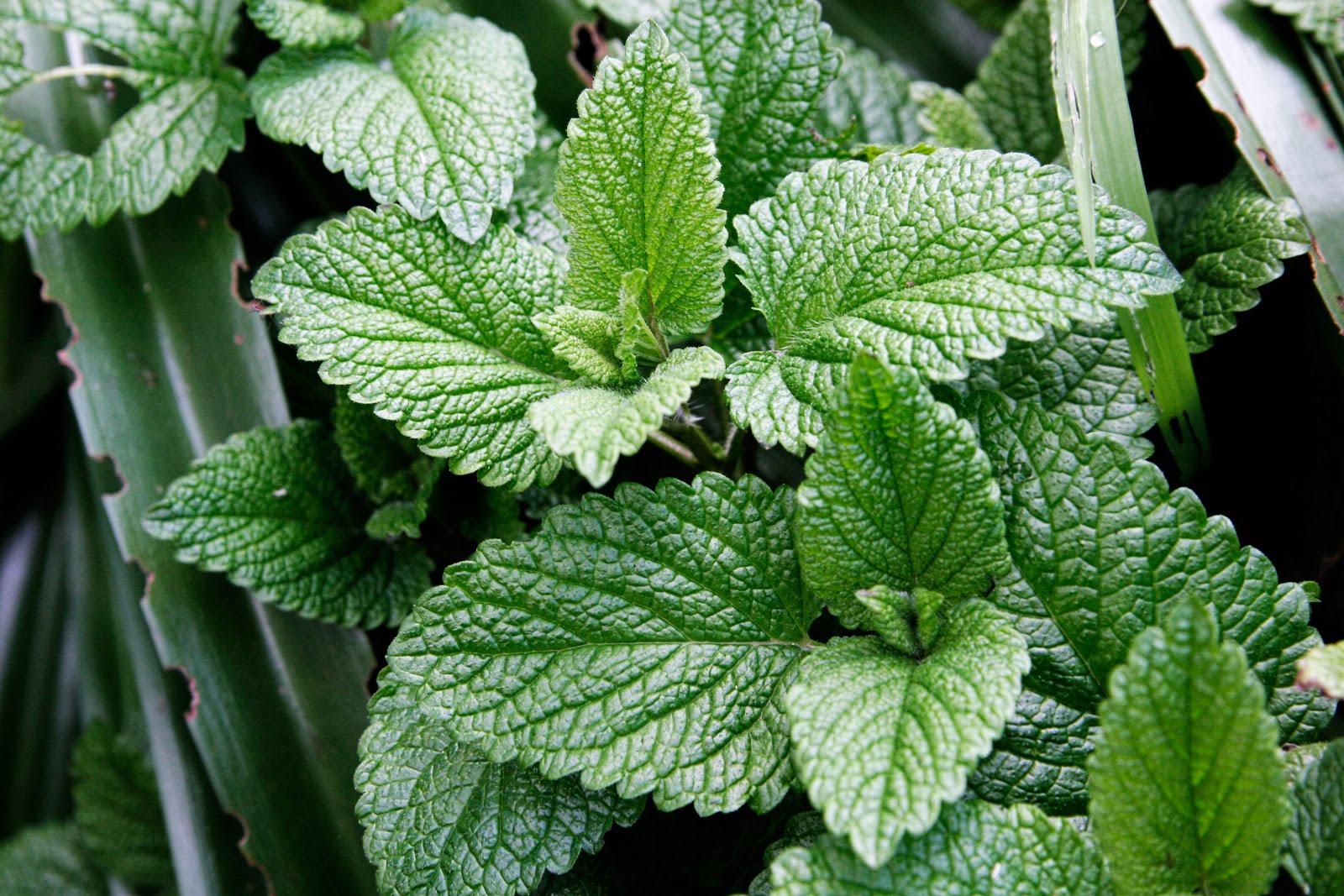
There's still time to enjoy my favorite new drink: sun mint tea . . . pick and tear up a handful of mint leaves and soak in a jar of water in the sun for a while (I put plastic wrap on top to keep the bees out). Even a few leaves and an hour or two makes water taste magnificent, a drink at once sweet, simple, and sophisticated, loved by both kids and adults---like drinking the sun.
Which reminds me of a quote from Galileo, of all people, that someone told me today at a wonderful harvest feast, a grape harvesting and potluck extravaganza held at Maine Coast Vineyards, our friends' local winery: "Wine is sunshine held together by water and alcohol." There was a lot of sunshine going around this wonderful harvest celebration, kids playing everywhere, generations mixing, work and relaxation--community grounded in food and the earth.
Subscribe to:
Posts (Atom)


 Posts
Posts

